At MIC, we believe the most powerful learning happens when subjects intersect, and the classroom extends into
the real world. This month, our Economics and Art students proved exactly that.
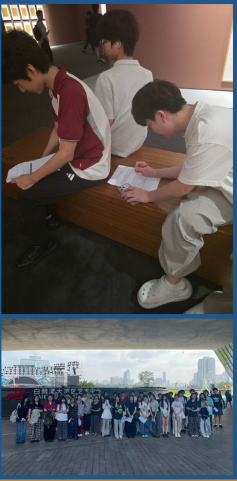
These two classes collaborated on an interdisciplinary field trip to the Guangdong Museum of Art and Shamian
Island in Guangzhou, bringing together different perspectives through a shared exploration of culture,
architecture, history, and place. Rather than studying these subjects in isolation, students explored how their
surroundings inspire creative and visual communication, approaching the same environments through different
academic and artistic lenses.
For Economics students, the trip offered a chance to examine the forces that shape cities, markets, and cultural
spaces. For Art students, it was an opportunity to observe how history, design, and environment influence
creative expression. Together, they discovered that the same street, building, or landscape can tell entirely
different stories depending on how you look at it.
This is learning without borders—where every experience becomes a lesson, and every perspective enriches
understanding. When students connect disciplines, they develop the kind of flexible, creative thinking that
prepares them not just for exams, but for life.
Great job to our Economics and Art students and teachers for embracing collaboration in its most adventurous
form. We look forward to seeing how they build on what they discovered.