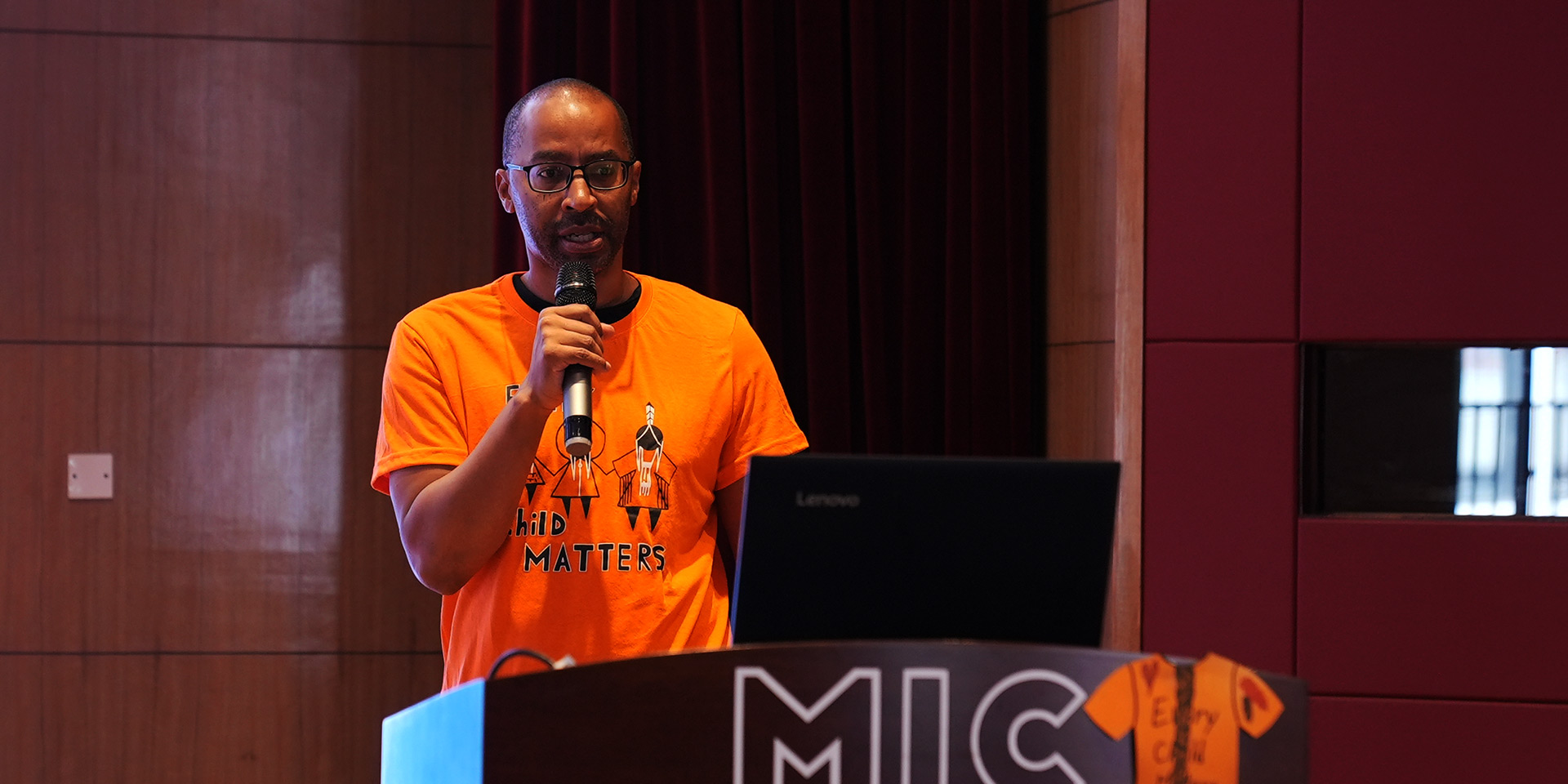

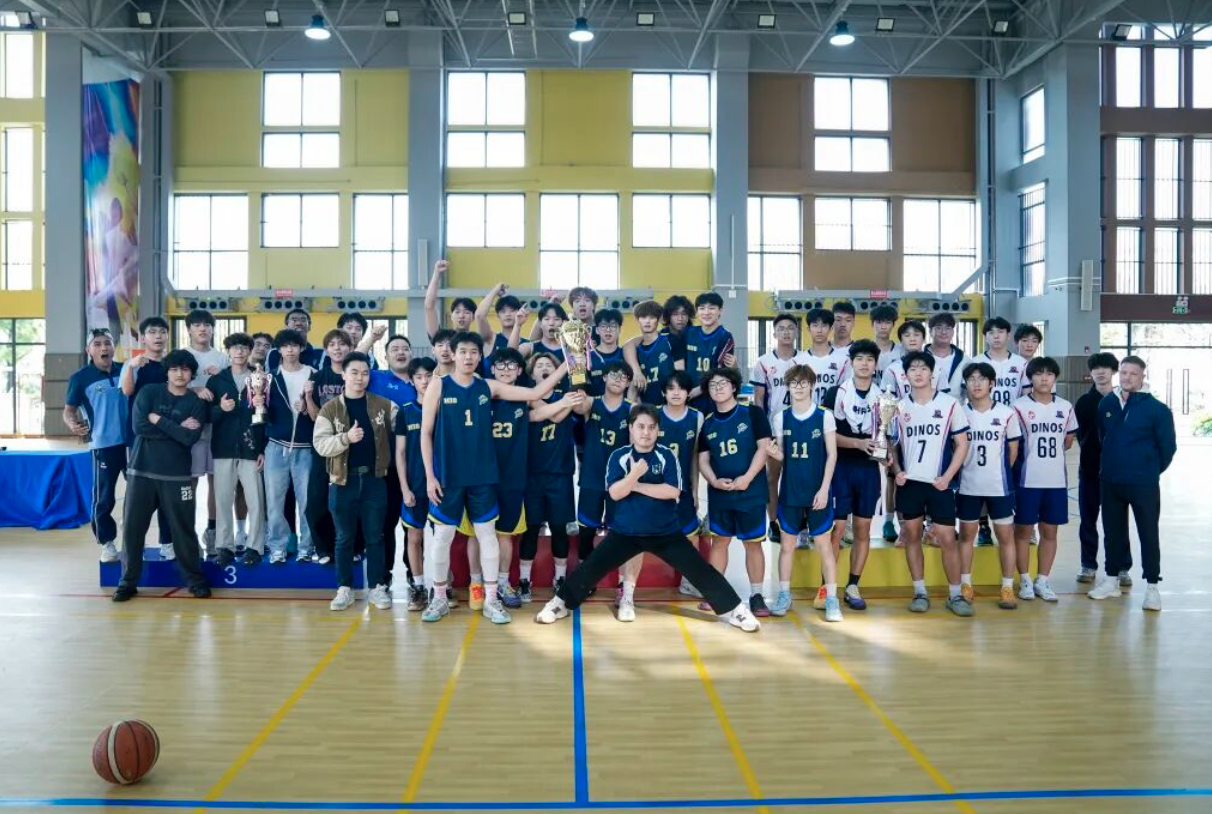
Recently, on the final court of the Six-School League, the MIC (Majestic International College) Boys' Basketball Team defeated their opponent with a score of 41:28, claiming the league championship for the very first time. This moment is not only a reward for the players' hard work but also a testament to the team's growth—from its early days of tentative break-in period to the seamless collaboration displayed on the court.
On the day of the final, the MIC team did not get off to a smooth start. They trailed for most of the first half, with the deficit hovering between five and six points. Guard Frankie recalled, "We were behind for most of the first half. I was a little worried, to be honest."
The turning point arrived in the third quarter. A three-pointer from teammate Teddy narrowed the gap to just one or two points, instantly reigniting the team's hope. Shortly after, Simon scored six consecutive points within three minutes through free throws, three-pointers, and layups, completely shifting the momentum of the game.
"When we were behind, we focused on defense. Defense is the best offense," Simon recalled. "When defending, I position my body directly in front of my opponent, one-on-one, and watch his hips to anticipate his direction." This ability to maintain tactical discipline under pressure is a clear sign of enhanced mental toughness.
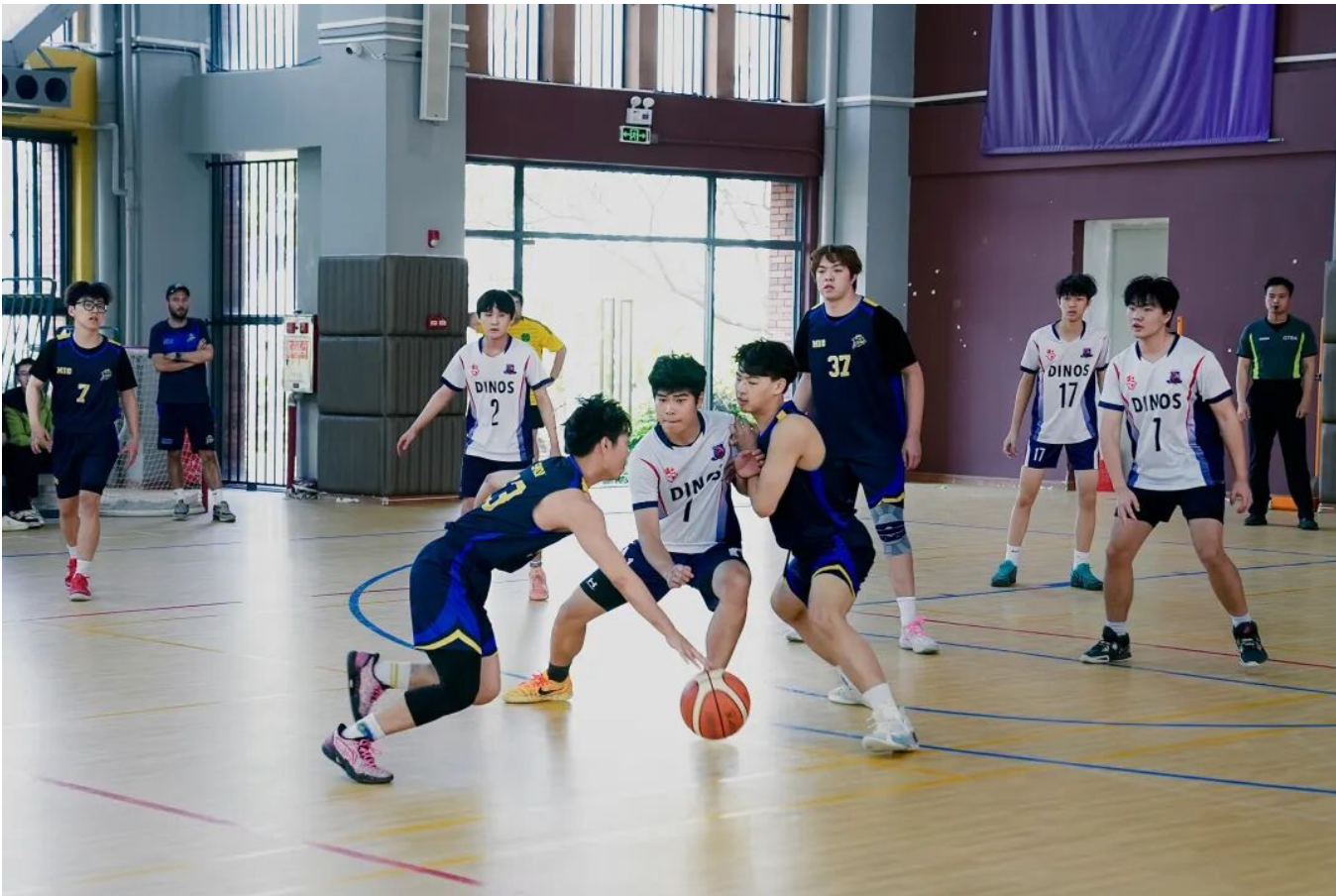
Daniel, also a guard, shared his experience with mindset management: "Having played in many games, my mindset stays steady. On the court, I calm my teammates, keep us focused on defense, and control the tempo." Ultimately, the team secured victory with a final score of 41:28.
Looking back on the team's development, all three veteran players highlighted the same key factor: structured training.
When Frankie joined the school team in 2022, practices were largely self-organized. Daniel described the team back then as having "no specific selection mechanism, with participation being the main goal."
Last year, the school hired a professional coach for the basketball team, introducing systematic training. Frankie explained, "Our training content became much richer, improving various aspects of our game—fitness, team coordination, offense. Fitness training includes shuttle runs and long-distance runs like 4000 meters or 2000 meters each month."
 Daniel felt a significant change: "We became a more organized team, with better discipline and stronger team cohesion. We had methods and tactics. Winning gave us positive feedback, and we learned a lot." The coach not only provided tactical guidance but also "advocated for favorable calls on the court and assessed teammates' conditions."
The coach's arrival also elevated the team's tactical level. Frankie revealed that the team now utilizes two distinct lineups: "One lineup plays a slower game, pushing the ball up gradually after a inbound pass to run set plays in the half-court. The other lineup is for fast breaks, focusing on steals and quick transitions."
Before the final, the team specifically analyzed their opponent's characteristics. "We had played against them before, so we knew their weaknesses very clearly," Frankie said. "Their weakness was their ball-handling; it was easier to steal the ball from them." The counter-attacking lineup deployed in the third quarter was specifically designed to exploit this vulnerability.
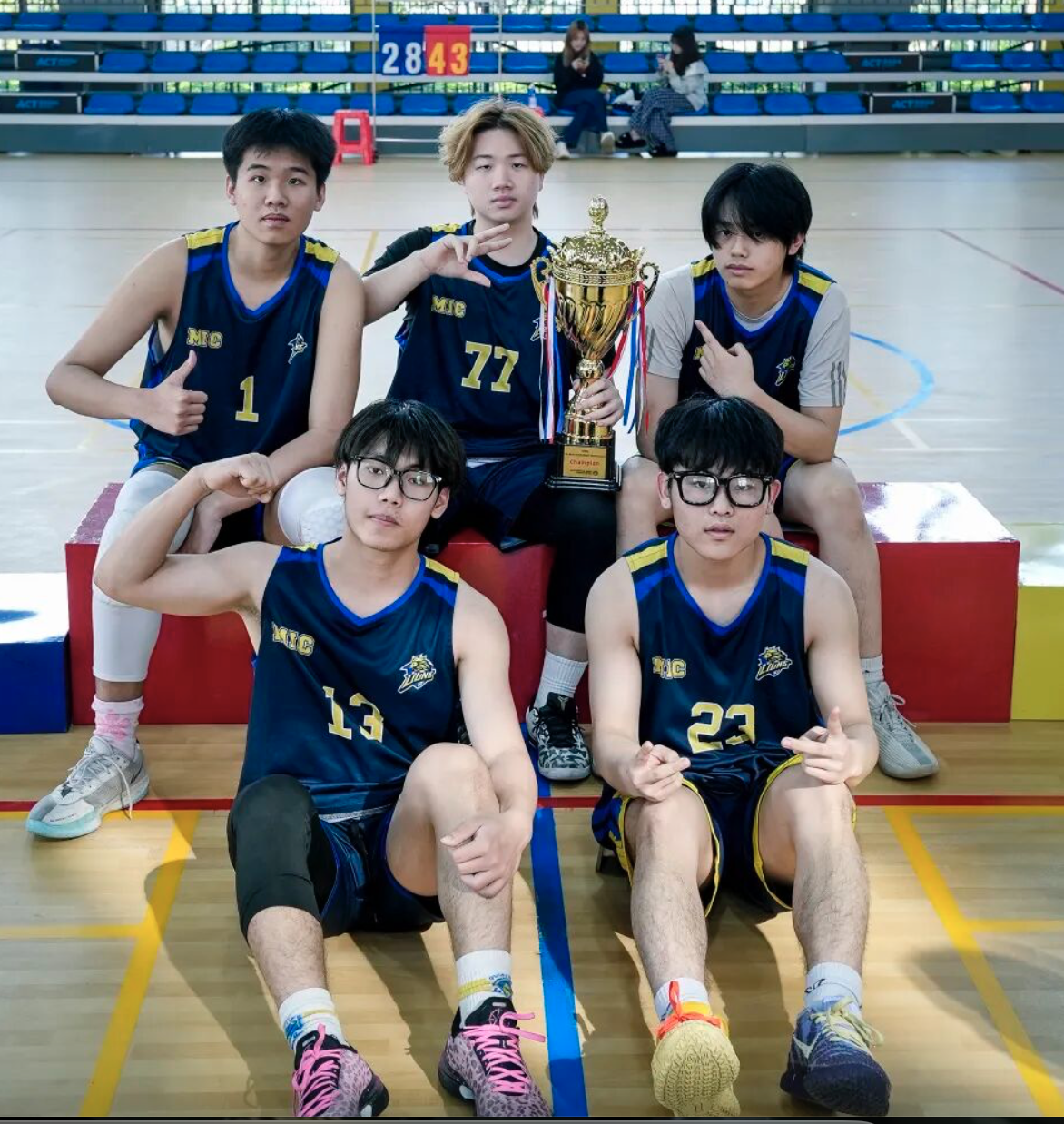
Defense has now become the team's hallmark. "Defense has become our team's defining characteristic in this league. We focus on defense, and then push for fast breaks after steals."
With systematized training, the players' physical capabilities have improved. Simon emphasized the importance of "maintaining physical contact and using physical advantages to wear down the opponent" on defense. Daniel mentioned that training focuses on targeted improvements "based on individual physical abilities, running, jumping, speed, stamina, and technical skills," enabling them to confidently use changes in physical movements to disrupt opponents during games.
"Managing your energy is key – you have to give 100% effort and stay highly focused throughout the game," Daniel added.
This preference for physical play is closely linked to the players' diverse athletic backgrounds. Daniel played rugby in primary school and was the national runner-up in the U16 rugby category. Frankie trained in Taekwondo for many years, was a member of the Liwan District team in Guangzhou, and won third place in a Haizhu District combat competition. Simon was previously a track and field athlete with a 100-meter sprint time of 11.9 seconds. Beyond basketball, the players regularly engage in fitness training, swimming, football, and other sports.
Beyond the court, these players also shine brightly in their respective fields of interest.
Frankie, a student pursuing an arts pathway, has already received an offer from the University of the Arts London. He has studied painting for three years and is also a rapper on NetEase Cloud Music with original songs. "I previously wanted to be a designer, focusing on menswear. Later, I did well in my Economics and Business classes, so I wanted to combine these two interests and chose Fashion Management."
Daniel also enjoys drawing and has created design portfolios including accessory and album covers. He has received offers from the Savannah College of Art and Design (SCAD) and the School of the Art Institute of Chicago (SAIC), both with scholarships. Simon plans to pursue further studies in Australia.
Regarding time management, Frankie has a clear plan: "I work on my art portfolio on weekends; sports training happens during school club time or evening self-study sessions. I usually finish my homework in the afternoon. I can manage each area. It's a bit tiring, but also very fulfilling."
Behind every championship team lies a journey of continuous growth. The MIC basketball team is no exception. From initial exploration to gradually finding their rhythm and confidence, they constantly pushed their limits through training and competition, ultimately became a championship team full of strength.
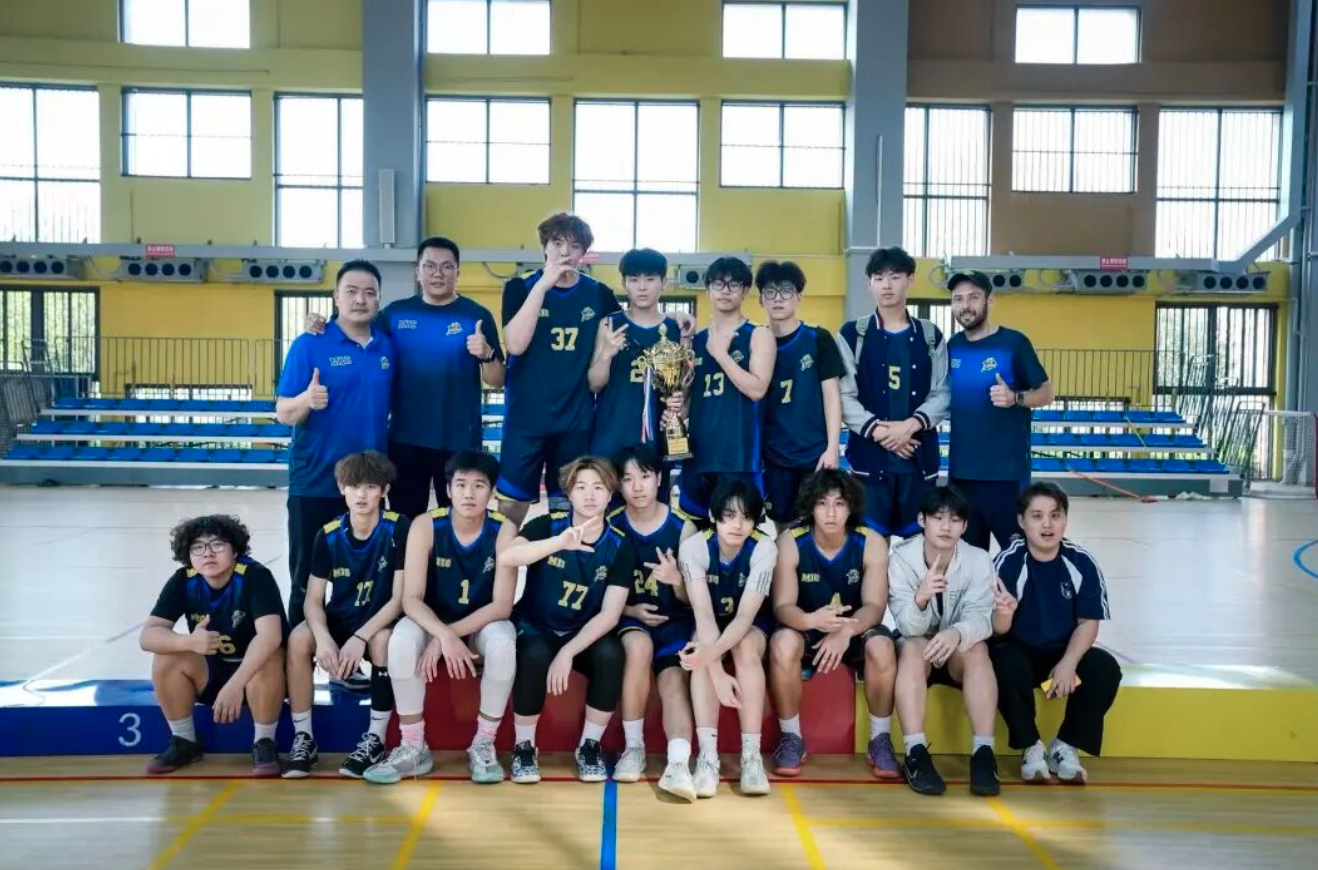
They are putting into practice the true essence of sports education—not just winning games, but building stronger individuals through sport. Learning extends beyond the pages of textbooks in the classroom; campus sports provide a vivid arena for growth. Here, every sprint challenges one's limits, every pass conveys trust, and every moment of perseverance represents self-transcendence. Through sports, MIC students forge stronger character, becoming globally-minded talents equipped with both resilience and a collaborative spirit.