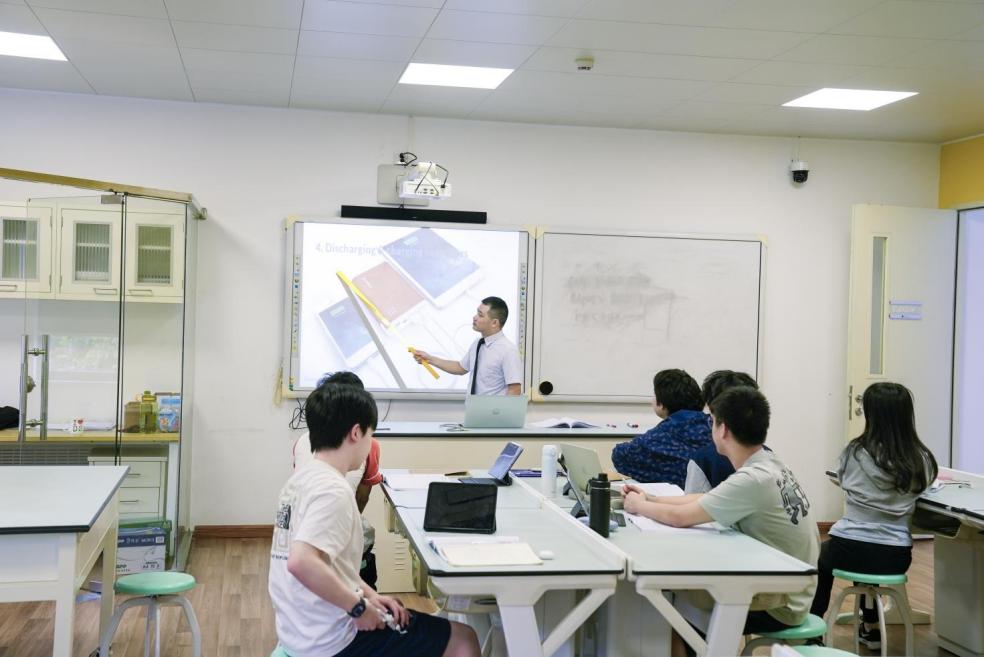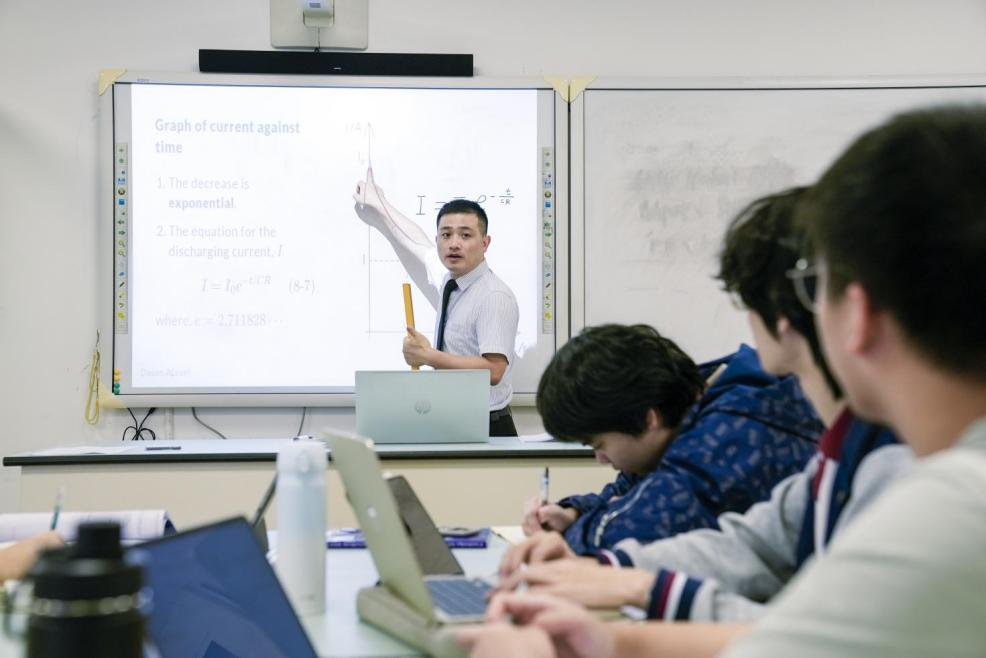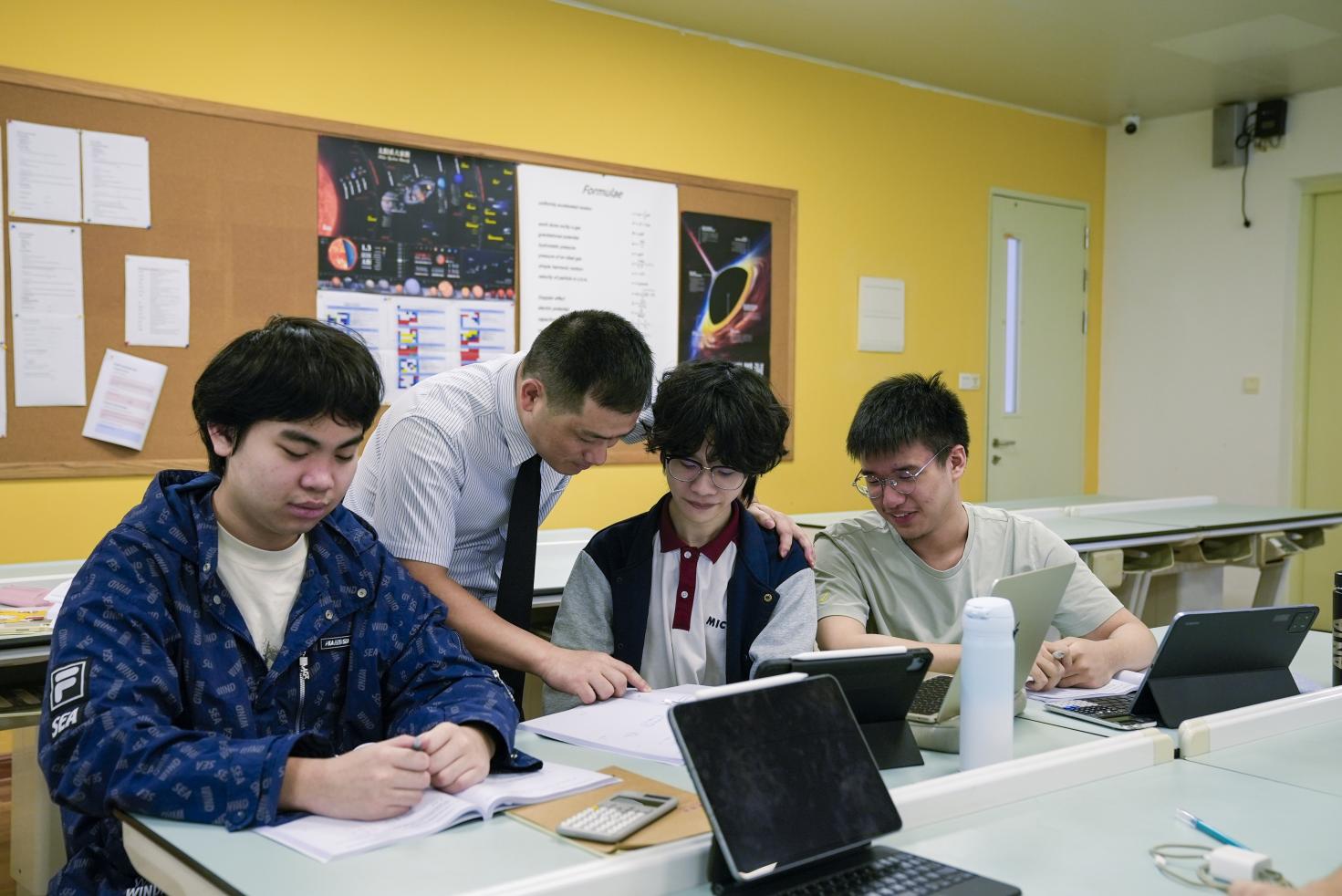

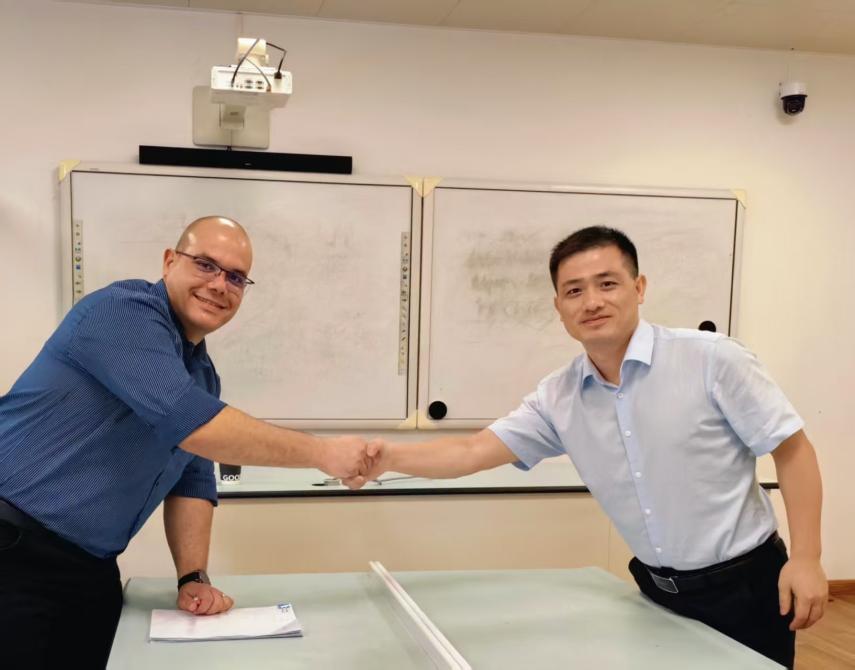
In the first ten years of my career, I taught Physics in Shanghai. I worked with many talented teachers. They showed me how to focus on teaching at every moment. From them, I learned to plan each lesson with care and to reflect after class. Inspired by them, I always work hard to make better slides, practice books, and other useful materials. I also learned to observe students closely and adjust my teaching to their needs.
MIC is a great school with a strong reputation. The people here are friendly and professional. I chose MIC because it values both high standards and student well-being. The school supports teachers to grow. It also gives students many chances to explore their interests. I feel I can contribute and also learn a lot here.
My vision is to build a strong Physics team and to raise performance in international exams. I want clear curricula, common assessments, and shared resources. I hope to start more clubs and projects, such as a Physics circle and a maker group. I also want to connect with other schools and enter more competitions.
I use simple metaphors that students know, and I explain step by step. I show a picture, a demo, or a short video. Then I break the idea into small parts. I ask quick questions to check understanding. After that, students try easy problems before harder ones.
Practice makes perfect. I will give students more chances for hands-on work in the labs. We will do short, focused experiments each week. Students will learn to plan, measure, record data, and reflect. Safety rules will be clear and simple. I will also add mini design tasks that connect to real life.
I will offer help after class and during study halls. I will prepare extra learning materials with guided notes, key formulas, and step-by-step examples. I will use small groups for targeted practice. I will also give short videos and practice quizzes so they can review at home.
I will encourage them to learn more and have the courage to try Physics competitions. I will suggest extension problems and enrichment readings. I will mentor small project teams, such as building devices or analyzing real data. I will also guide them to online courses and journals for deeper study.
I am amazed by cause and effect. One small change can lead to a big result. This idea works in Physics, and it also guides our minds and actions. It teaches us to look for reasons, test ideas, and think carefully before we act.
Physics studies the universe and the environment where we live. From this view, our daily life is part of Physics. Phones, lights, sound, sport, and weather all follow physical laws. When students understand these laws, they see the world with new eyes and make smarter choices.
In the age of AI, technology is very important in education. I will use simulations to model motion and waves. I will use data loggers to collect real measurements. I will use AI tools for practice questions and quick feedback. I will also use videos and virtual labs so students can review anytime.
I like reading, especially history. I enjoy learning how people and ideas changed the world. I also like playing sports, such as badminton and basketball. Exercise helps me relax and stay healthy.
Time is valuable. Spend free time wisely. Make a simple plan, with time for homework, reading, hobbies, rest, and exercise. Keep your phone under control. Learn a little every day, and you will see big progress.